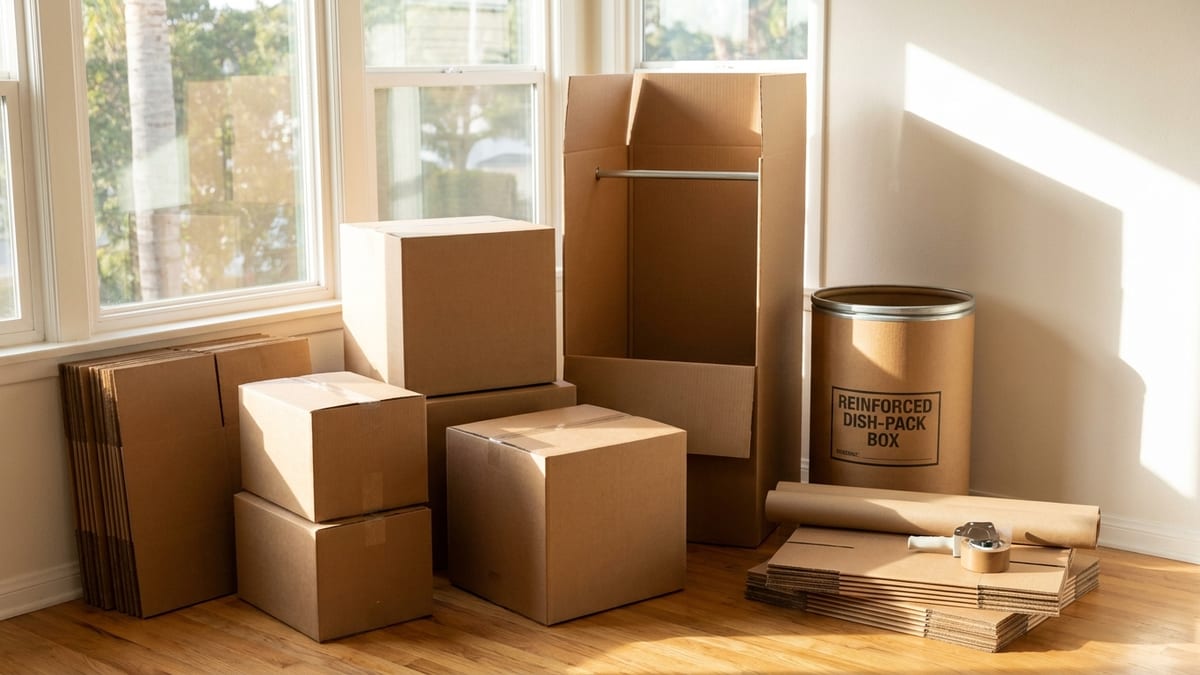
The best moving boxes are double-wall small boxes for heavy items like books, medium boxes for most rooms, dish-pack boxes for the kitchen, and wardrobe boxes for hanging clothes. Buy new for fragile and heavy loads; used grocery boxes are fine for linens and pillows. Get the right mix before you start packing and the whole move goes faster.
Box types and what each one is for
Not every box works for every room. Here’s what the main types do and where they belong.
Small boxes (1.5 cu ft) are the workhorses of any move. They’re sized so you can fill them completely without making them too heavy to lift safely. Use them for books, canned goods, tools, records, and anything else that gets dense fast. A fully loaded small box should top out around 30 to 40 pounds. Double-wall construction matters here more than anywhere else.
Medium boxes (3 cu ft) handle the widest range of stuff. Kitchen appliances, toys, folded clothes, bathroom supplies, framed photos, and most of what’s in your closets fits comfortably. They’re the box you’ll use most. Plan on ordering more mediums than anything else.
Large boxes (4.5 to 6 cu ft) are for light, bulky items only. Pillows, comforters, throw blankets, lampshades, stuffed animals. The temptation is to load them heavy because there’s so much room. Don’t. An overpacked large box breaks mid-carry and it’s not a good moment.
Dish-pack boxes have double-thick walls and typically come with cell dividers. They’re built specifically for glassware, plates, mugs, and anything fragile in the kitchen. Wrap each piece individually and stand plates on edge inside the box. For more on this technique, see our guide on packing fragile kitchen items the professional method.
Wardrobe boxes are tall, reinforced, and come with a hanging bar across the top. You pull clothes straight off the rod in your closet and hang them inside. No folding, no wrinkling, no guessing what’s in the box. They’re pricier than standard boxes but they pay for themselves in time saved on move day.
Mirror and picture boxes are adjustable flat-pack boxes that telescope to fit frames of different sizes. Wrap the glass with packing paper first, then slide it into the box. They keep corners from getting crushed and glass from cracking during loading.
Specialty boxes for TVs, mattresses, and bicycles exist for good reason. A TV without a fitted box is one pothole away from a cracked screen. If you’re packing a large flat-screen yourself, the manufacturer’s original box is still the best option if you have it.
How many boxes you need by home size
These are typical starting counts. Every home is different depending on how much stuff you have and how long you’ve lived there.
| Home size | Typical total boxes | Small | Medium | Large |
|---|---|---|---|---|
| Studio | 20 to 30 | 8 | 10 | 4 |
| 1-bedroom | 35 to 50 | 12 | 20 | 6 |
| 2-bedroom | 55 to 75 | 18 | 30 | 10 |
| 3-bedroom | 80 to 110 | 25 | 45 | 15 |
| 4-bedroom | 120 to 150+ | 35 | 65 | 20 |
These counts don’t include dish-pack or wardrobe boxes. Add roughly two to four dish-pack boxes per kitchen depending on how much glassware you have, and one wardrobe box per closet rod.
It’s better to order more than you think you need. Most retailers take back unused boxes if they’re still flat and undamaged. Running out mid-pack is a worse problem than having a few left over.
New vs used boxes, and where to get them in San Diego
Used boxes can save you money on the right items. Grocery store banana boxes and liquor store boxes are free, structurally sound, and good for linens, pillows, and clothes. The catch is they’re irregular sizes and you can’t always trust the condition. Check for moisture damage, crushed corners, and weakened seams before using any used box for anything heavy or fragile.
For books, kitchen items, electronics, and anything breakable, buy new. New boxes have known wall ratings, consistent sizing, and no hidden weak spots. The cost difference is small compared to replacing a damaged item.
Where to buy in San Diego:
- Moving supply stores and truck rental locations carry full box kits and let you buy what you need. You can usually return unused flat boxes.
- Home improvement stores stock the basics (small, medium, large, a few specialty sizes). Good for a quick top-up but the selection is limited.
- Online retailers are worth it if you’re buying in volume. Compare per-box pricing on a medium or small; kits often come out cheaper per unit.
- Neighborhood apps and Buy Nothing groups are hit or miss but free. Worth checking if your move is a month out. Don’t count on them as your primary source.
If you’d rather not deal with any of this, our packing services include all materials. We bring the right boxes for each room and pack everything ourselves.
What makes a box actually good
Not all cardboard is the same. Here’s what to look at before you buy.
Double-wall vs single-wall. Single-wall is fine for light loads. Double-wall has two layers of fluting between the outer sheets and handles significantly more weight and compression. Use double-wall for books, kitchen items, tools, and anything going on the bottom of a stack.
The size match matters. A box that’s too big for its contents shifts and flexes during transit. You want a box where the contents fill it snugly with padding on top, not a half-empty box with items rattling around inside.
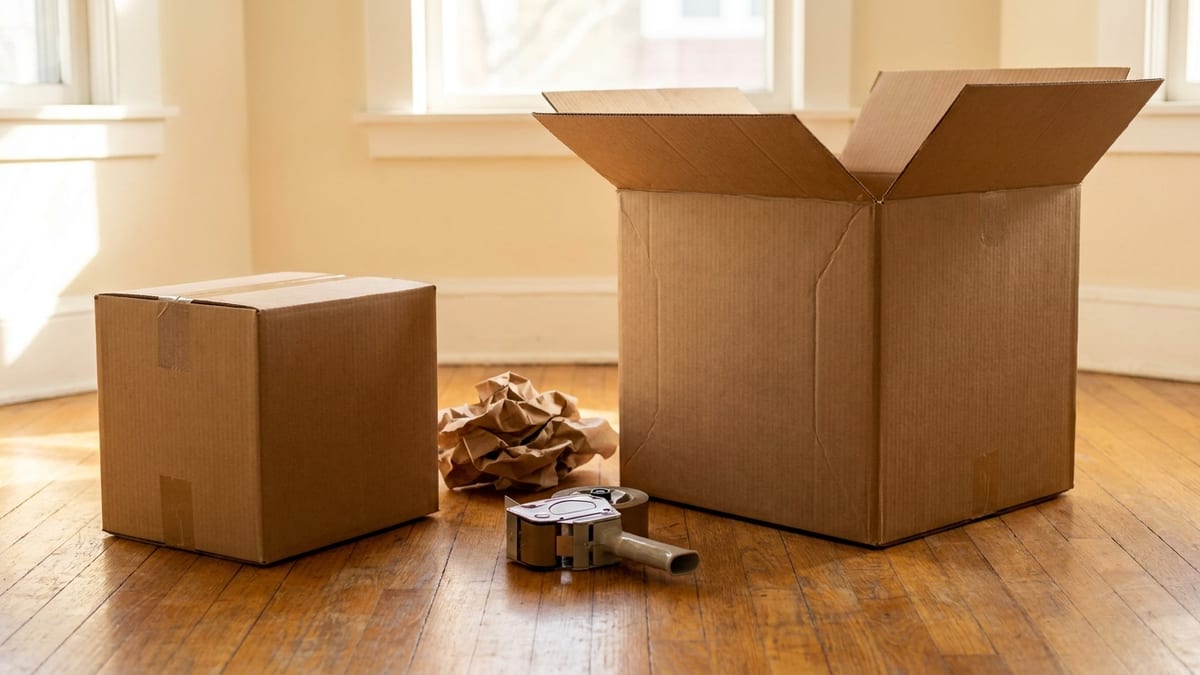
Box tape, not masking tape. Moving boxes need 2-inch packing tape applied in the H-pattern across the bottom seam and crossing the flaps. Masking tape peels. Painter’s tape peels faster. Use the right tape.
Consistent sizing across your move. When your boxes are all the same standard sizes, movers can stack them efficiently in the truck, which means fewer shifts and less chance of anything tipping or sliding.
How to pack each box right
Getting the box type right is half the job. Packing it correctly is the other half.
Weight limits. Small boxes max out around 30 to 40 pounds. Medium boxes around 50 to 60. Large boxes should stay under 50 pounds even though they could physically hold more. If a box is too heavy for one person to carry comfortably from waist height, it needs to be repacked.
No half-empty boxes. Boxes that aren’t full collapse under the weight of whatever’s stacked on top. Fill any gaps with crumpled packing paper, bubble wrap, or soft items like towels before closing.
Heavy on the bottom, light on top. Inside each box, heavier items go down and lighter items go up. Same principle applies to how boxes get stacked in the truck.
Label every box on the top and on one side. The top label helps when boxes are stacked; the side label helps when they’re in a row. Write the destination room and a short note about the contents. Your movers will thank you and your unpacking will go faster.
Plates on edge, not flat. Flat plates act like a surface that absorbs impact directly. Standing them on edge inside a dish-pack box means the load is distributed along the rim, which is where the structural strength is.
For a full room-by-room breakdown of what goes where, see our guide on how to pack for a move room by room. If you want to know what professional packing actually costs before deciding whether to do it yourself, our post on packing services cost in San Diego covers typical pricing and what’s included.
If you want the boxes, the materials, and the packing handled for you, call us at (858) 925-5546 and we’ll take care of it.
Frequently asked questions
How many moving boxes do I need for a 2-bedroom?
Most 2-bedroom homes need between 55 and 75 boxes, typically a mix of small, medium, and large. Add two to four dish-pack boxes for the kitchen and one wardrobe box per closet. Order a few extra so you don’t run out mid-pack.
Are used boxes safe for moving?
Used boxes are fine for light, soft items like linens, pillows, and folded clothes. For books, fragile items, and kitchen goods, buy new. Check any used box for moisture, crushed corners, or weakened seams before trusting it with anything heavy.
What’s the difference between single-wall and double-wall boxes?
Single-wall boxes have one layer of corrugated fluting between two flat sheets. Double-wall has two layers. Double-wall handles more weight and resists compression better, which matters when boxes are stacked in a truck. Use double-wall for heavy or fragile loads.
Where can I get free moving boxes in San Diego?
Liquor stores, grocery stores, and Buy Nothing groups are the most reliable sources. Banana boxes from grocery stores are especially sturdy. Check Nextdoor or Facebook Marketplace for people giving away boxes after a recent move. Plan ahead since availability is unpredictable.
How do I keep boxes from collapsing during a move?
Pack boxes full so there are no gaps for the walls to flex inward. Tape the bottom with two strips of 2-inch packing tape in an H-pattern. Use double-wall construction for heavy loads. Stack lighter boxes on top of heavier ones, and never stack more than four or five high.
Do I really need wardrobe boxes?
You don’t need them, but they save a lot of time. If you have more than one closet’s worth of hanging clothes, wardrobe boxes mean zero folding and zero wrinkling. For a large home, renting wardrobe boxes from your moving company is usually cheaper than buying them outright.