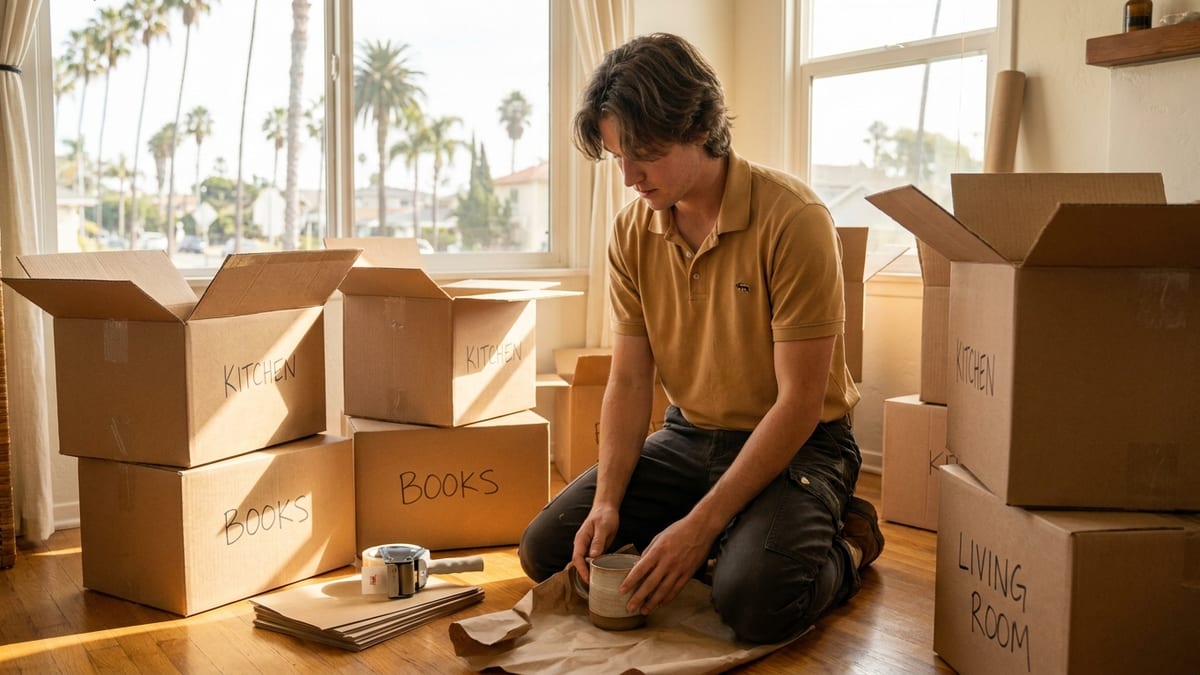
Knowing how to pack for a move comes down to one principle: work room by room, not box by box. Pack one room at a time, starting 2-3 weeks out with the rooms you use least, and keep an essentials box you load last and unload first. Label every box by room and contents, and put heavy items in small boxes. Do that consistently and you’ll spend less time searching for things on the other end.
Your packing timeline and supply list
Start buying supplies at least three weeks before your move date. Running out of boxes mid-pack is one of the most common reasons moves run long.
What you’ll need:
- Small boxes (books, tools, canned goods)
- Medium boxes (linens, pots, toys)
- Large boxes (pillows, lamp shades, bulky but light items)
- Wardrobe boxes (hanging clothes)
- Packing paper (newspaper leaves ink on everything)
- Bubble wrap for fragile items
- Stretch wrap for furniture drawers and doors
- Two- and three-inch packing tape with a dispenser
- Permanent markers, at least two colors
- Colored stickers or masking tape in four or five colors, one per room
A 1,200-square-foot two-bedroom typically needs 40-50 boxes. Buy more than you think you need. Unused boxes return to most home improvement stores or sell on Marketplace quickly.
Rough timeline:
| Week | Focus |
|---|---|
| 3 weeks out | Storage rooms, garage, off-season items, décor |
| 2 weeks out | Guest room, spare rooms, books, non-daily-use kitchen |
| 1 week out | Main bedrooms, living room, remaining kitchen |
| 2-3 days out | Bathroom, daily-use items |
| Move day | Essentials box, beds, what’s left |
If you’re working with a tight window, see our full San Diego moving checklist and timeline for a day-by-day breakdown.
Room-by-room packing order
Storage areas and garage first
Garages and storage rooms hold the things you barely touch. That makes them the right place to start. You won’t miss them, and clearing this space early gives you somewhere to stage finished boxes without cluttering living areas.
Pack tools in small boxes. They’re dense and heavy. Wrap power tool blades and anything sharp. Drain gas from lawn equipment before packing it near anything else.
Off-season gear (holiday decorations, camping equipment, sports gear you won’t use before the move) can go in large boxes. Label them clearly so they don’t get confused with daily-use items.
Guest and spare rooms next
Spare bedrooms are usually holding areas for things you don’t use regularly. Go through them honestly. Donate or trash what you haven’t touched in a year. The items you keep, pack by category: books with books, linens with linens.
Books are heavy. A small box full of books is heavy enough. A medium box full of books is a back injury. Use small boxes only. Line them spine-down for stability.
Linens pack well in medium boxes. Bedding doubles as padding. Wrap fragile items from other rooms in a spare blanket before placing them in a linen box.
Kitchen: the hardest room
The kitchen takes longer than any other room. Give yourself at least two separate packing sessions.
Start with what you use least: seasonal serving dishes, specialty appliances, the stand mixer you pull out twice a year. Then work toward the everyday items in your final kitchen session a few days before the move.
Dishes pack best vertically, like records in a crate, not flat. Use a cell box divider if you have one. Wrap each dish in packing paper before placing it.
For glassware and anything breakable, we go deeper in our guide to packing fragile kitchen items. If you’d rather not deal with the kitchen yourself, our packing services page explains what full and partial packing looks like.
Bedrooms
Pack closets first. Wardrobe boxes let hanging clothes transfer directly without folding. For folded clothes, suitcases and duffel bags work as well as boxes and take up the same truck space.
Disassemble bed frames the night before your move, not weeks early. You still need to sleep there. Keep all hardware (screws, bolts, hex keys) in a labeled zip-lock bag taped to the frame.
Nightstands and dressers: remove drawers, wrap them in stretch wrap to keep contents from spilling, and stack them flat. Some movers carry dressers with drawers in. Ask yours before move day.
Bathroom and daily-use items last
Pack the bathroom two to three days before the move, not before. You’re using it every day.
Consolidate toiletries. Toss anything almost empty rather than packing it. Seal liquid bottles inside zip-lock bags before boxing them, even if the caps seem secure. A shampoo leak ruins a box fast.
Medicine goes in a clearly labeled bag you keep with you, not in the truck.
A labeling and inventory system that actually works
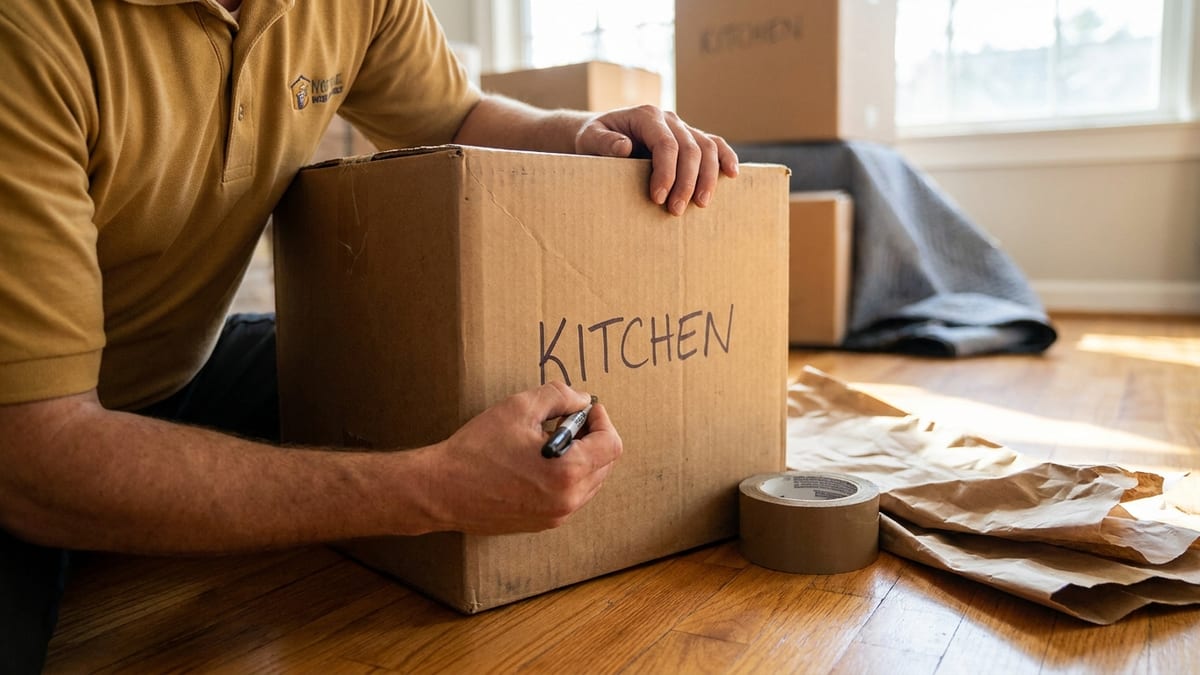
Good labeling takes five extra seconds per box and saves you hours on the other end.
Write on the top and on at least one side of every box. Boxes stack. You need to read the label without moving the stack.
Use two-color labeling: write the destination room in large letters with one marker, then list the top three contents in smaller text below. “MASTER BED / extra pillows, nightstand lamp, winter blanket” is much more useful than “BEDROOM” alone.
Color stickers by room. Blue for the master bedroom, green for the kitchen, orange for the garage. Assign colors before you start and stick them on every box and bag from that room. When movers are offloading, they can place boxes without asking you where each one goes.
For high-value or fragile items, keep a running phone note or spreadsheet: item name, which box it’s in, box number. You don’t need to number every box, just the ones that hold anything you’d be upset to lose or break.
San Diego specifics worth knowing
Most packing guides are written for generic conditions. San Diego has a few things worth factoring in.
Don’t stage boxes in the garage for weeks. Inland neighborhoods like El Cajon, Santee, and Lakeside get real summer heat. Cardboard weakens in sustained heat, and electronics, candles, and vinyl records can be damaged. Pack and stage boxes inside, in a climate-controlled room, until the truck arrives.
Coastal humidity and cardboard. Neighborhoods near Mission Beach, Ocean Beach, or Coronado have higher humidity, especially overnight. Cardboard absorbs moisture. If you’re packing weeks in advance in a home close to the water, check your boxes before move day. Boxes that feel soft or damp should be reboxed.
Parking permits for load day. Older neighborhoods with street parking (North Park, South Park, Hillcrest, some of Kensington) sometimes need temporary no-parking permits to hold curb space for the truck. Check with the city at least five days out. Your moving company should know this, but confirm it.
HOA elevator and loading dock rules. If you’re moving into or out of a condo, the HOA may require padding the elevator and reserving a loading window. Start that conversation at least two weeks before your move.
The essentials box
The essentials box is the one box you don’t put on the truck with everything else. It rides with you, or it’s the last box loaded and the first one off.
It should contain everything you’d need if your other boxes didn’t arrive until tomorrow: a change of clothes, phone chargers, toiletries, medications, a few snacks, coffee supplies if that matters to you, paper towels, toilet paper, and a set of basic tools (screwdriver, Allen wrench set for reassembling beds and furniture).
Label it clearly. “OPEN FIRST” in large letters. Make sure every household member knows which box it is before move day starts.
Short on time? If you’d rather hand the packing off, call us at (858) 925-5546. We offer full and partial packing services, and we can work around your schedule. See what’s included on our packing services page.
Curious what professional packing costs in San Diego? This breakdown covers current pricing.
Frequently asked questions
How far in advance should I start packing?
Start three weeks out if you can. Begin with storage areas and rooms you use least, then work toward daily-use spaces in the final week. Rushing packing in the last 48 hours is one of the most common reasons moves go over time and over budget.
What size boxes should I use for books?
Use small boxes only. A box of books that’s too large to carry comfortably is a risk to your back and to the box itself. Fill small boxes about two-thirds full and use packing paper to fill the gap so the top doesn’t collapse under stacking weight.
Do I need to disassemble all furniture before the movers arrive?
Not everything, but some things. Bed frames, large sectionals, and anything that won’t fit through a door assembled should be broken down before move day. Most moving crews can handle basic disassembly, but confirming in advance saves time. Ask when you book.
How do I pack dishes without breaking them?
Pack them vertically, like records, not flat. Wrap each dish individually in packing paper, use a cell divider box if you have one, and mark the box “FRAGILE - THIS SIDE UP” on all four sides and the top. Our guide to packing fragile kitchen items covers the full method.
What should I not pack in the moving truck?
Keep medications, financial documents, irreplaceable photos, jewelry, and any items of high sentimental value with you in the car. Also keep your essentials box, laptop, and phone chargers accessible. Flammable or hazardous materials (propane, paint, cleaning chemicals) generally can’t go on a truck.
How do I keep boxes from being heavy?
Mix heavy and light items within boxes, never fill a large box entirely with heavy items. Heavy items like books, tools, and cast iron go in small boxes. Use the extra space in any box with heavy items for lighter things like packing paper, linens, or small soft goods to fill the void without adding dangerous weight.