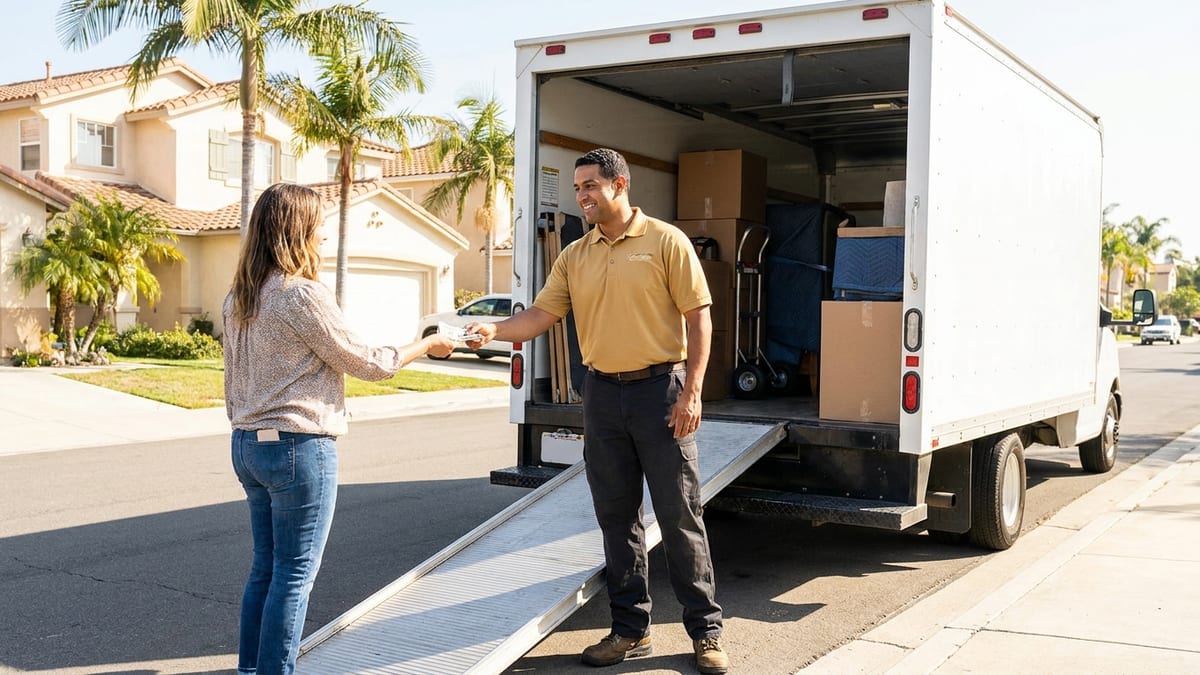
A reasonable tip for movers is $20 to $40 per mover for a half-day move (under four hours) or $40 to $80 per mover for a full day. If you’d rather use a percentage, 10 to 20 percent of the total bill, split evenly among the crew, lands in the same range. Cash at the end of the job is the standard. Hand it directly to each mover, not just the lead.
That’s the short answer. The longer answer depends on how hard the job actually was, and in San Diego, hard moves are common. Stairs in Normal Heights, no elevator in a Hillcrest mid-rise, a third-floor unit with a tight stairwell in La Jolla, or a July move in 85-degree heat all change the picture.
What the numbers look like by move size
The table below covers typical San Diego local moves. These are ballpark figures, not a formula. Adjust up for anything that made the job harder than average.
| Move size | Duration | Suggested tip per mover |
|---|---|---|
| Studio or 1BR (light load) | 2 to 3 hours | $20 to $30 |
| 1BR or small 2BR | Half day (3 to 4 hours) | $25 to $40 |
| 2BR to 3BR | Full day (5 to 8 hours) | $40 to $60 |
| Large 3BR or 4BR | Full day, 3+ movers | $60 to $80 |
| Complex or oversized move | Full day, overtime possible | $80 to $100+ |
A two-person crew on a three-hour studio move might each get $25. A three-person crew grinding through a heavy four-bedroom with a piano and a fourth-floor walk-up might each get $80. Both are appropriate.
Flat tip per mover vs. percentage of the bill
Most people find it easier to tip per mover rather than by percentage. You know exactly who worked and how hard. For a $1,200 move with three movers, 15 percent is $180 total, or $60 each. That lines up with the table above for a full-day 2BR to 3BR.
The percentage approach makes more sense on larger bills where the work genuinely matches the cost. For a local move under $600, percentage math can produce tips that feel low given the physical effort. In those cases, use the per-mover flat range instead.
Either method is fine. The crew won’t know which formula you used. They’ll just notice whether the amount felt fair for what the day asked of them.
When to tip more in San Diego
San Diego’s geography and housing stock create a specific set of hard-move conditions that genuinely warrant tipping on the higher end.
Stairs without an elevator. A lot of San Diego apartments were built before modern elevator requirements. Hillcrest, North Park, South Park, and Mission Hills all have buildings where the crew carries everything up two or three flights. That’s the most physically demanding version of the job. If your building had no elevator and you were on anything above the first floor, tip on the higher end.
La Jolla and coastal hills. Streets in La Jolla, Pacific Beach, and Point Loma get steep and narrow. The truck parks farther from the door, the crew carries items longer distances, and the terrain adds time and strain. Add $10 to $20 per mover on top of the baseline.
Summer heat. San Diego summers are mild by national standards, but a July or August move in the inland neighborhoods, Santee, El Cajon, or even Mira Mesa, can hit 95 degrees by noon. Working in full sun, carrying heavy furniture, is a different job than a February coastal move. Factor that in.
Tight access and tricky parking. Downtown condos, Gaslamp, Little Italy, and some beach communities have parking restrictions and narrow access points. If the crew had to improvise because of a difficult approach, that’s worth acknowledging in the tip.
Long carry or elevator waits. If your building’s elevator was shared with residents and the crew had to wait repeatedly, or if the truck had to park a block away, the elapsed time on the job was longer than the item count would suggest.
You can read more about what drives the actual bill in our guide to how much a local move costs in San Diego in 2026.
When you don’t need to tip extra
Tipping is not automatic and it’s not mandatory. There are moves where the standard range, or even the lower end of it, is the right call.
If something went wrong during the job, a damaged piece, a late start, items placed in the wrong rooms despite clear labeling, that affects the tip. You’re not obligated to reward a crew that was careless with your belongings.
If the move was genuinely easy, ground-floor unit, minimal furniture, short drive, two hours total, the lower end of the range is fair. The tip should reflect the difficulty of the actual job, not just the fact that someone showed up.
If the company added fees you didn’t expect and the bill came in well above the estimate, it’s reasonable to tip at a lower percentage while you work through the billing question separately.
Who to tip and how to do it
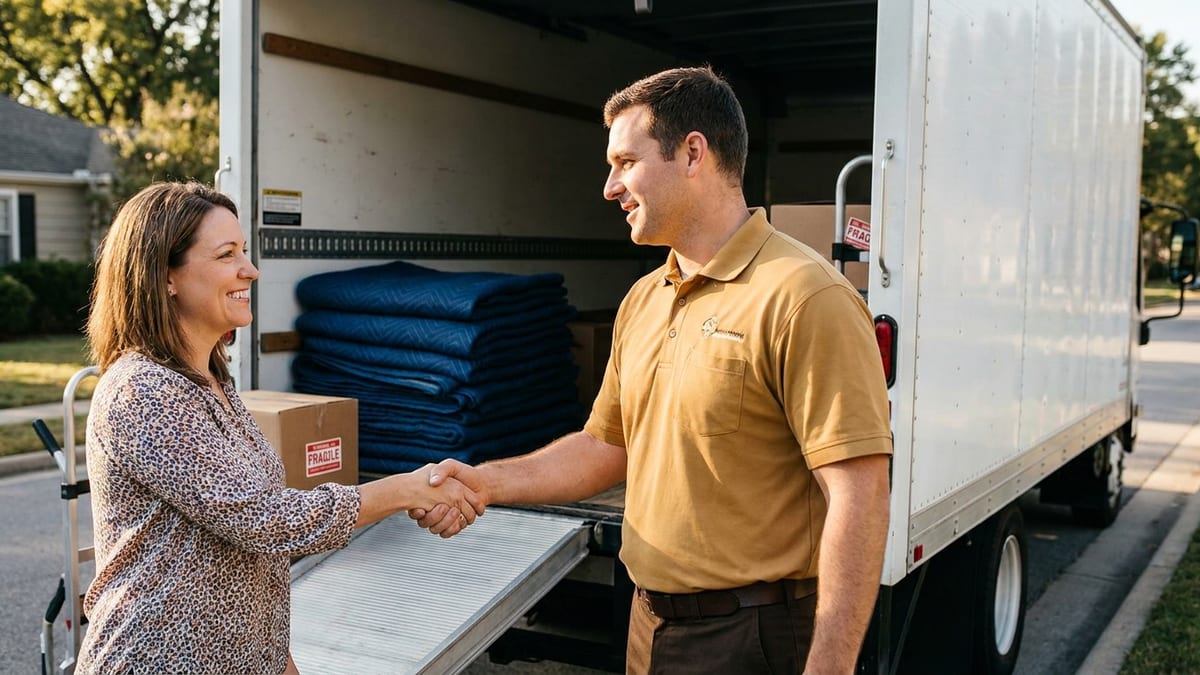
Tip every mover who worked the job, not just the crew lead or the person who was most visible. The person who spent four hours on the truck doing the heavy lifting and said almost nothing earned the same as the one who gave you the walkthrough.
Cash is standard and strongly preferred. It’s immediate, doesn’t require a third party, and the movers can split it however they agree. Venmo or Zelle work if the crew accepts them, but ask first. Don’t add a tip to a credit card payment and assume it’ll reach the crew. Not every company passes those through.
Hand tips directly to each mover at the end of the job, not to the office, not to the driver on behalf of the crew. Direct means it lands where it’s intended.
If you used labor-only movers for loading or unloading without a truck, the same tipping logic applies. The physical work is identical. Tip per person based on hours and difficulty.
Food, water, and other ways to show appreciation
Offering water and snacks is always appropriate and genuinely appreciated, especially on a warm day. It’s not a substitute for a monetary tip, but it matters. A six-pack of bottled water in a cooler, some granola bars, or an offer to grab lunch if the move runs into the afternoon all land well.
Coffee in the morning for an early start is a small thing that gets noticed. If you’re ordering lunch anyway, asking the crew if they want anything costs almost nothing. These gestures don’t change the tip math, but they signal that you see the people doing the work.
Packing services crews work the same physical hours as the moving crew. If a separate team packed your home the day before, tip them at the same rate, based on hours and difficulty.
If you’re getting a quote for your San Diego move and want a binding estimate you can actually plan around, call us at (858) 925-5546. We’ll give you a real number, not a range that doubles on move day.
Frequently asked questions
Do you have to tip movers in San Diego?
No, tipping is not required. It’s a custom that reflects how the job went. A fair wage is built into what you pay the company. That said, moving is demanding physical work, and a tip for a job done well is widely expected in the industry.
What if the movers did a bad job?
Adjust the tip to match the quality of the work, or skip it if the job was genuinely poor. Damaged items, careless handling, or a crew that was clearly disengaged are all valid reasons to tip at the low end or not at all. If something was damaged, address it with the company directly as a separate matter.
Should you tip the driver and the helpers separately?
Tip every person who physically worked the move. If the driver was also doing the heavy lifting alongside helpers, they each get a tip. If the driver only drove and wasn’t involved in carrying, use your judgment based on what they actually contributed.
Is it better to tip at the start or end of the move?
End of the move. You want to tip based on what actually happened, not what you hoped would happen. Tipping at the end also avoids any awkward dynamic where the crew is waiting to see what the number is before the job’s done.
What about a long-distance move from San Diego?
For an interstate or cross-country move, the same per-mover ranges apply, but it’s often split into two tips: one for the origin crew loading the truck in San Diego, one for the destination crew unloading it. If it’s the same crew both ways, tip once at delivery. The total should reflect the full scope of the job.
Can you tip with a gift card or alcohol instead of cash?
Cash is by far the most practical option. Gift cards for a specific store don’t work for everyone, and some companies have policies against accepting alcohol. Stick with cash or ask about digital transfer options before the day of the move.