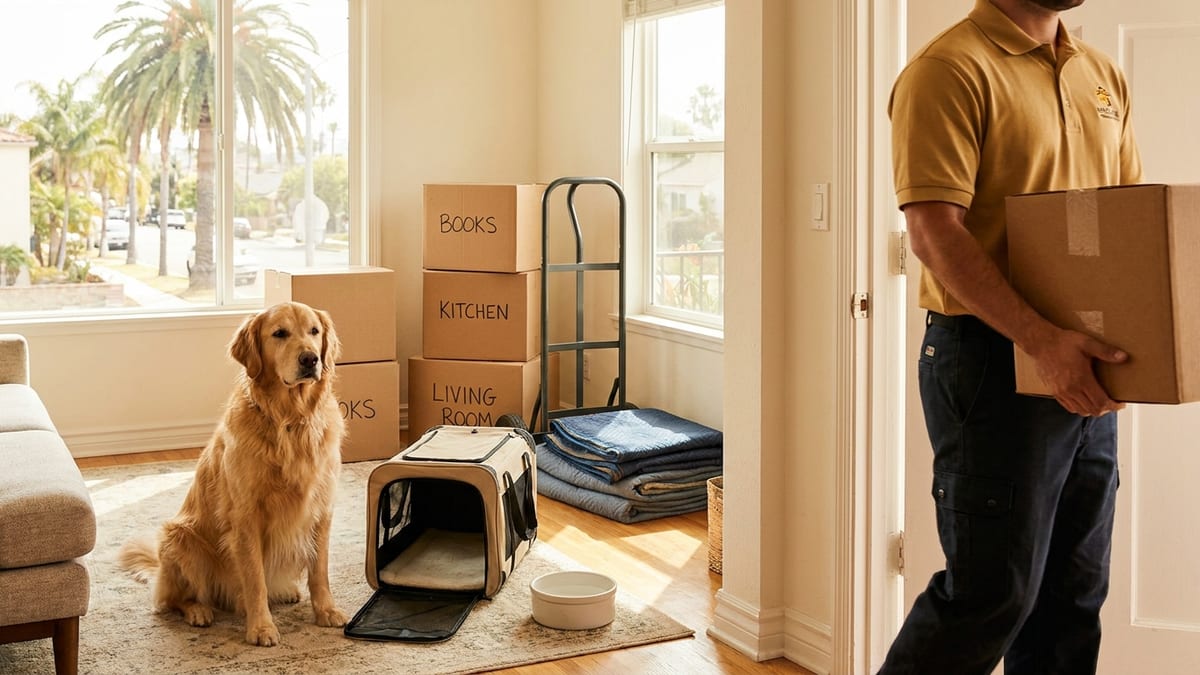
Moving with pets doesn’t have to be chaotic. The calmest way to move with pets is to keep them in a quiet, closed room or with a sitter on load day, then settle them into one secure room first at the new place. Update the microchip and ID tag with your new address, and never leave a pet in a parked car in San Diego heat. That’s the whole plan. Everything below is just the detail behind those four steps.
Before the move: vet records, carrier training, and the sitter question
Start at least two weeks out. Get a copy of your pet’s vaccination records and any prescriptions from your current vet. If you’re moving across town, your vet may stay the same. If you’re moving farther, ask for a referral or request records in a transferable format.
For cats especially, the carrier is the single biggest stressor on move day. If your cat only sees the carrier when it’s going to the vet, it already has a bad association. Put the carrier out a week early with a familiar blanket inside. Let your cat explore it on its own terms. By move day, it should feel like furniture, not a trap.
Dogs read your stress. If you’re running around barking orders and carrying furniture, your dog picks that up and amplifies it. A dog walker or a friend who can take your dog for a long morning walk does more good than any calming supplement.
The sitter-vs-quiet-room question comes down to your pet’s temperament. A high-anxiety dog that bolts at open doors should be with a sitter or at a daycare. A mellow cat that hides under beds can probably do fine in a closed bathroom with food, water, a litter box, and a familiar shirt of yours. Just make sure every mover on the crew knows that room stays closed.
Our full moving checklist and timeline walks through all the pre-move tasks week by week. Adding a “pet column” to that checklist is worth the five minutes.
Load day: the plan that keeps pets safe
On the day the truck arrives, do this before the first mover walks in the door. Put your pet in the designated room. Put a sign on the door. Tell every person working the move, including the crew lead, that the room is off-limits.
Pets that wander near a move-in-progress are a real hazard. A dog underfoot near someone carrying a heavy dresser is dangerous for the dog and the mover. An open front door plus a stressed cat equals a lost cat in a new neighborhood where it has no landmarks. Neither situation is recoverable easily.
If you’re moving into or out of an apartment building, the hallways and elevator add another layer of risk. Leashes and carriers are mandatory, not optional. Check out what to expect with apartment moves in San Diego for the full rundown on building rules and elevator reservations that affect timing on move day.
Feed your pet a smaller meal than usual the morning of the move. A full stomach plus car stress is a recipe for a mess in the carrier. Water is fine. Light on food.
The drive and San Diego heat safety
San Diego gets hot. The coastal strip stays mild most of the year, but inland areas like El Cajon, Santee, and Escondido can hit 90 to 100 degrees in summer. A parked car becomes an oven in minutes.
The rule is simple: if the car is off and you’re not in it, your pet is not in it. That includes the five-minute stop at a gas station. Cracking the windows does very little when ambient temps are high. Don’t take the chance.
For the drive itself:
- Run the AC the whole time, even if it means you’re a little cold.
- Keep carriers off direct sunlight. A towel draped over the carrier on the sunny side helps.
- Bring water and a collapsible bowl. Offer water at every stop.
- Don’t open the carrier in the car unless it’s an emergency. A loose cat in a moving vehicle is a distraction you don’t need.
Most San Diego moves are local and short. If your drive is under an hour, your pet will be fine with minimal intervention. For longer hauls, plan a rest stop every 90 minutes.
The first 48 hours at the new home
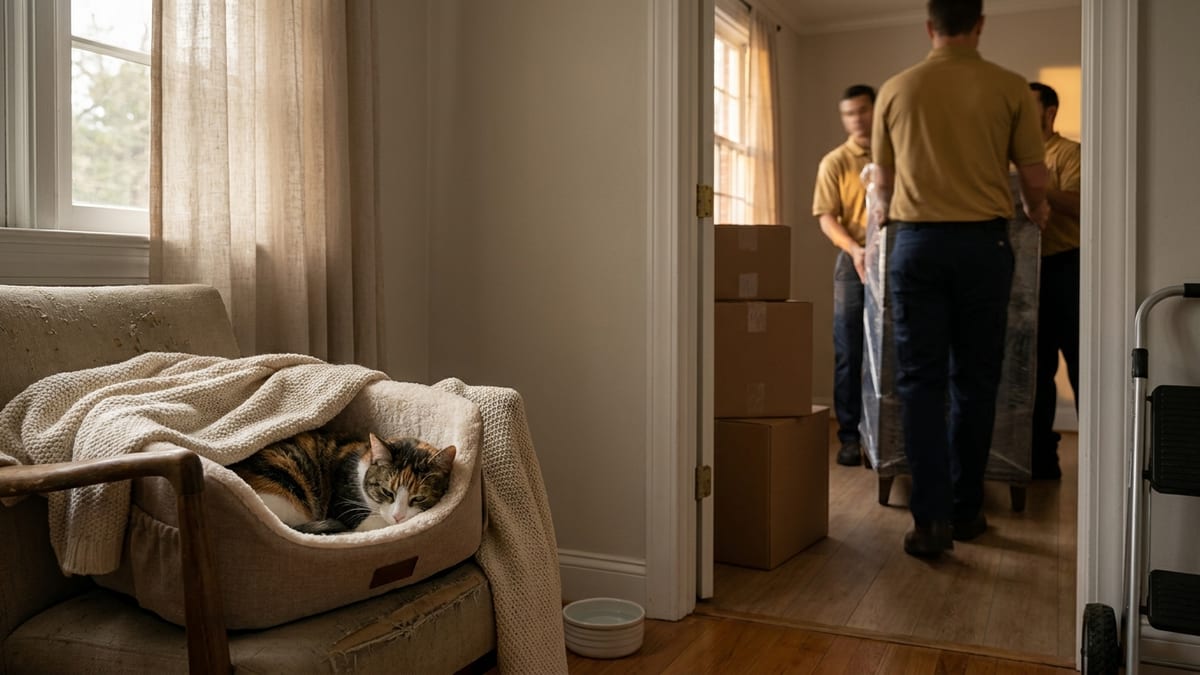
Don’t open the carrier the second you walk in. Let your pet decompress in one designated room before they experience the whole house. Set up that room first: food, water, litter box for cats, bed or crate for dogs, and something that smells like your old place, a worn t-shirt, their regular blanket.
Give cats at least a full day in that room before opening the door. They’ll meow. That’s normal. Cats map space by scent, and a whole new house is overwhelming. One room at a time helps them build a mental map without panic.
Dogs can explore sooner, but keep them leashed on the first walkthrough. You need to see how they react before you give them the run of the place. Check for escape routes: gates that don’t latch, gaps in fencing, doors that don’t close fully.
This matters especially in San Diego because the weather means windows and doors stay open more often than in colder climates. An unsecured screen door is a flight risk for a dog or cat that hasn’t settled in yet.
Updating microchip, ID tag, and finding a local vet
This is the step most people push off until something goes wrong. Do it the week you move in, not after.
Your pet’s microchip number doesn’t change, but the contact information attached to it does. Go to the microchip registry (AVID, HomeAgain, Found Animals, etc.) and update your address and phone number. It takes five minutes online.
Order a new ID tag with your new address before move day if you can. They’re inexpensive and fast to ship. If you can’t get one in time, write your new phone number on a strip of tape and stick it to the collar temporarily.
For San Diego city licensing, dogs over four months old need a current license. If you moved within the county, update your address with San Diego County Animal Services or the city, depending on where you are. You’ll need proof of current rabies vaccination.
Finding a new vet is straightforward if you ask your current vet for a referral. Most clinics can recommend someone in your new neighborhood. If you’re starting from scratch, Yelp reviews filtered by “neighborhood” and sorted by most relevant tend to surface solid options quickly.
Dogs vs. cats: what’s different
The experience of moving with a dog and moving with a cat is meaningfully different. Here’s a quick reference for both.
| Move stage | Dogs | Cats |
|---|---|---|
| 2 weeks before | Update ID tag, schedule boarding or walker for move day | Introduce carrier, put familiar bedding inside |
| 1 week before | Practice car trips if not used to them | Keep carrier accessible, don’t force interaction |
| Move morning | Feed lightly, long walk before crew arrives | Smaller meal, confine to a quiet room early |
| Load day | Sitter or daycare strongly preferred | Closed room with sign on door, litter box inside |
| The drive | Leashed in carrier or with harness + seatbelt | Carrier covered, minimal noise, AC on |
| Arrival | Leashed walkthrough of new home, secure fencing check | One room only for first 24 hours |
| First 48 hours | Gradual room expansion with supervision | Slow room-by-room access over 2-3 days |
| First week | Establish new walk routes and routine | Check all windows and screens for gaps |
| Within 10 days | Update city dog license with new address | Update microchip registry and vet records |
If you’re moving with both a dog and a cat, keep them in separate rooms on move day. Even animals that coexist peacefully at home can stress-react to each other when both are already overwhelmed.
If you need a local moving team in San Diego that works around your pet plan and communicates clearly with you about timing, we’d be glad to help. Call (858) 925-5546 to lock in a date and talk through what the day looks like.
You can also browse the Swift Move SD San Diego moving service area to confirm we cover your neighborhood.
Frequently asked questions
What should I do with my dog on moving day?
The safest move is to have your dog out of the house entirely. A dog walker, a friend, or a daycare keeps them away from open doors and moving equipment. If that’s not possible, put them in a closed room with food, water, and a sign on the door telling the crew to keep it shut.
Is it safe to transport my cat in the car during a San Diego summer?
Yes, as long as you keep the AC running the entire drive and never leave your cat in a parked car. Direct sun through windows can overheat a carrier quickly, so drape a towel over the sunny side. Offer water at every stop.
How long should I keep my cat in one room after moving in?
Give cats at least 24 hours in a single quiet room before opening the door to the rest of the house. Some cats need 48 hours. You’ll know they’re ready when they stop hiding and start exploring the edges of the room with curiosity rather than panic.
How do I update my pet’s microchip after a move?
Log into the microchip registry website (HomeAgain, AVID, Found Animals, or whichever service registered the chip) and update your address and phone number. The chip number stays the same. This takes about five minutes and should happen the week you move in.
Do I need a new dog license when I move within San Diego County?
You need to update your address with the licensing authority for your new city or county area. San Diego County Animal Services handles unincorporated areas; City of San Diego handles residents within city limits. You’ll need a current rabies certificate on file. The license number usually carries over, but the address update is required.
Should I feed my pet normally on moving day?
Feed a smaller meal than usual the morning of the move. A full stomach combined with car travel and stress increases the chance of nausea or an accident in the carrier. Water is fine in normal amounts. Resume regular feeding once you’re settled at the new place.