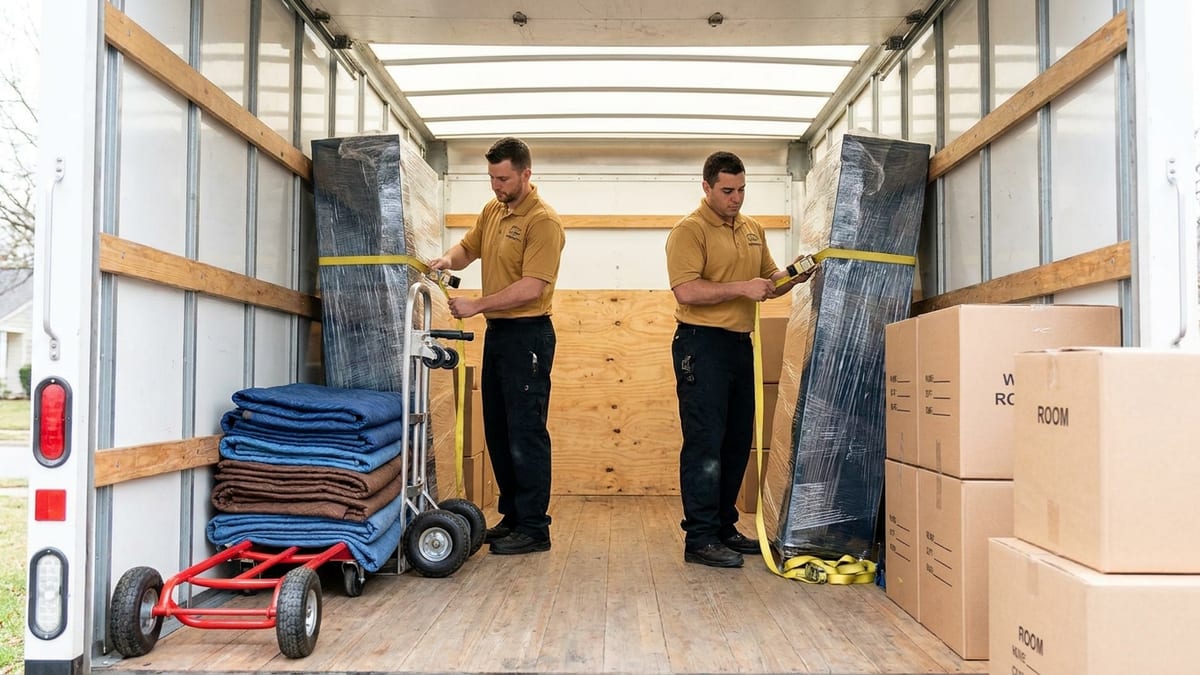
Load a moving truck in tiers from front to back: heaviest items like appliances and dressers against the front wall first, then mid-weight furniture, then boxes stacked heavy-on-bottom, with fragile items and odd shapes last. Tie off each tier so nothing shifts on the freeway. Get that order right and you’ll arrive with intact furniture and a truck that handles predictably the whole drive.
The wall-by-wall tier method
Think of the truck floor as three zones: front third, middle third, rear third. Each zone gets a specific weight class. That structure keeps the load from shifting on steep grades and protects lighter items from getting crushed.
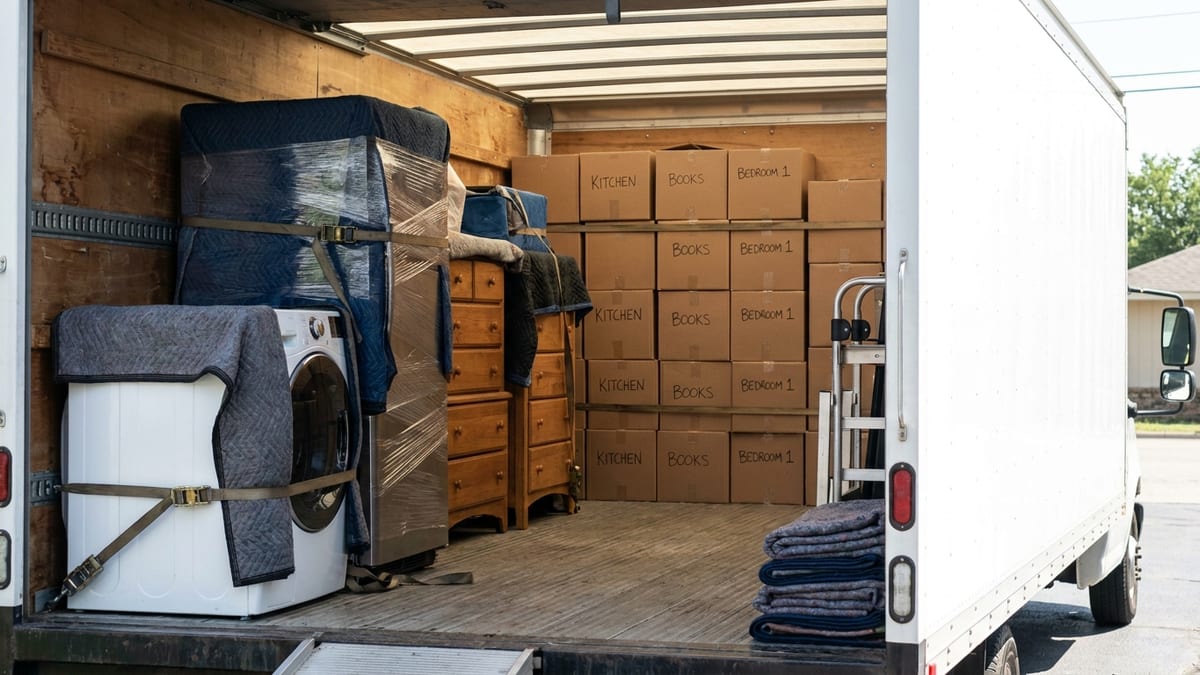
Front tier (against the cab wall): This is your heaviest, most structurally solid furniture. Refrigerators, washing machines, dryers, dressers, bookshelves, and filing cabinets go here. Stand them upright whenever the item is designed to travel that way. A refrigerator laid on its side can damage the compressor; a dresser laid flat takes up three times the floor space it needs. Fill the gaps between large pieces with folded moving blankets or rolled rugs to stop lateral movement.
Middle tier: Sofas, bed frames, box springs, dining tables, and desks land here. Sofas often travel best on end, stood upright against the side wall, which frees the floor for stacking boxes underneath. Disassemble bed frames and bundle the rails together. Wrap glass tabletops in moving blankets and slide them vertically between mattresses or sofa backs rather than laying them flat under weight.
Rear tier (last on, first off): Boxes, lamps, loose items, and anything fragile goes closest to the door. You’ll unload this first, so it makes sense to stage it last. Keep awkward items like floor lamps and folding chairs here too. They’re hard to strap tightly and easier to manage when they’re accessible.
Weight distribution: heavy low and balanced side to side
Tall or top-heavy loads shift on curves. San Diego’s freeway system has enough sweeping on-ramps and tight surface streets to feel that movement. Two rules fix most weight distribution problems.
First, keep heavy items as low as possible. Appliances and furniture stay on the floor. Boxes ride on top of furniture only when the furniture is low and stable. Never stack heavy boxes on a mattress or sofa cushion, they compress the padding and shift unpredictably.
Second, balance the load across both sides of the truck. If all your heavy furniture ends up on the driver’s side, the truck will pull slightly on every turn. Load one heavy piece on the left, one on the right, alternating as you go. It sounds like a small thing, but over a 20-mile drive on the I-8 with steep grades and long downhill runs, a balanced load makes a real difference in how the truck handles.
Securing each tier with straps and rope
Every tier needs to be tied off before you load the next one. Most rental trucks come with anchor points along the interior walls, use them.
Ratchet straps are the standard choice. Run one horizontally across the front tier at mid-height, tighten until the load doesn’t rock. Add a second strap lower down if the tier is taller than four feet. Repeat for the middle tier before you start loading the rear.
For boxes stacked in columns, use vertical straps from floor anchor to ceiling rail. Boxes topple forward during hard braking. A single strap across the top of a column prevents a domino effect that can crack dishes, monitors, and picture frames.
Moving blankets do double duty, they’re both padding and gap-fill. Stuffed between furniture pieces, they prevent metal and wood from grinding against each other and reduce movement inside each tier.
If you’re renting a truck and loading without help, this step is easy to skip when you’re tired. Don’t. The strapping is what separates a clean move from one where you open the door and find a pile.
Protecting furniture: pads, plastic wrap, and vertical loading
Furniture pads (also called moving blankets) should cover any wood, painted surface, or upholstered piece. Wrap the pad around the item and secure it with stretch wrap or packing tape, not directly to the wood. Tape on bare wood pulls the finish when you remove it.
Upholstered pieces like sofas and chairs pick up dirt and scuffs from contact with the truck walls. A layer of stretch wrap over the blanket keeps moisture and grime out.
Mirrors and large framed artwork need their own handling. Stand them vertically, never flat. Two pieces of cardboard taped around the frame protect the corners, which are the most vulnerable part. Slot them between a mattress and the truck wall, or secure them in a mirror box if you have one.
Drawers are worth removing from dressers before loading. They reduce the dresser’s weight, prevent them from sliding out mid-drive, and can carry clothes inside them if the dresser is wrapped. Stack the drawers face-down near the dresser so they’re easy to reassemble.
For furniture moving across longer San Diego drives, extra padding on corners and vertical storage for all upholstered pieces will save you from damage claims at the other end.
San Diego specifics worth knowing before you load
A few local factors affect how you should think about the load.
The I-8 eastbound has long, steep grades between Mission Valley and El Cajon. If the load is front-heavy and poorly strapped, braking on a downhill stretch at highway speed will send boxes forward. Make sure your front tier strapping is tight before you get on the freeway.
The 15 through Miramar and Rancho Bernardo has sweeping curves at speed. A side-heavy load will want to lean on those curves. Balance matters on this route.
North Park, Hillcrest, and parts of downtown have narrow streets with tight turns and limited clearance. If you’re loading a 26-foot truck on a residential block, check the street length before you commit. Backing a long truck out of a dead-end is a genuine problem. Position the truck so the rear door faces the street, not the property, it’s faster to load and easier to pull away without maneuvering.
Parking permits are required in many San Diego neighborhoods for oversized vehicles. Check with the city or your building management if you’re moving from an apartment with street-only parking. A ticket plus a tow is a bad way to start a moving day.
If navigating all of this sounds like a lot while you’re also managing the actual packing, labor-only movers in San Diego can handle the loading while you direct traffic. They bring the straps and the blankets. You supply the truck.
Load tier reference
| Tier | Zone | What goes here |
|---|---|---|
| 1, Front | Against cab wall | Appliances, dressers, bookshelves, filing cabinets, heavy furniture |
| 2, Middle | Center of truck | Sofas, bed frames, mattresses, dining tables, desks |
| 3, Rear | Near door | Boxes, lamps, fragile items, awkward shapes, first-off items |
For local moving in San Diego, getting the tiers right before you pull out of the driveway saves you from repacking at the destination.
Renting a truck versus hiring labor-only loaders
Renting a truck and loading it yourself costs less upfront. You pay for the truck rental, fuel, and mileage. The tradeoff is time, physical strain, and the risk of loading mistakes that damage furniture.
Labor-only moving services split the difference. You rent the truck; a crew loads and unloads it. They know the tier method, they have the straps and blankets, and they can pack a 26-footer faster than most people do it in a full day. For larger moves or if you have heavy appliances or a third-floor walkup, the labor cost usually pays for itself in time and back strain.
If you’d rather have a crew load it tight, call (858) 925-5546 for labor-only help from Swift Move SD.
Frequently asked questions
What do you load first in a moving truck?
Load the heaviest items first, against the front wall of the truck. Appliances, dressers, bookshelves, and large furniture pieces go in the front tier. This keeps the weight over the rear axle and forward, which helps with truck handling and prevents lighter items from being crushed.
How do you keep boxes from sliding in a moving truck?
Stack boxes heavy-on-bottom within each column, and run ratchet straps horizontally across stacked columns before you load the next tier. Filling gaps between columns with rolled towels or blankets also stops lateral sliding. Don’t leave empty space in the rear tier, packed space is stable space.
Should mattresses go flat or upright in a moving truck?
Mattresses can travel flat if you have floor space, but they’re often used as vertical dividers between tiers or as padding for glass tabletops and mirrors. If you stand a mattress upright against the truck wall, strap it so it can’t fall forward during braking.
How do you protect furniture in a moving truck?
Wrap each piece in moving blankets and secure the blanket with stretch wrap. Stand upholstered furniture on end when possible to reduce the footprint and keep fabric off the floor. Wrap legs and corners separately if the piece has protruding hardware. Tape directly to wood will pull the finish, always tape over the blanket, not the surface.
How do you load a moving truck on San Diego’s steep hills?
Keep heavy items low and well-strapped before hitting grades on the I-8 or the 15. Braking hard on a downhill run will push the load forward if it’s not tied off. Tighten the front-tier straps more than you think you need to, a little extra tension is easier to deal with than a shifted load at the bottom of a hill.
Can you load a moving truck the night before?
You can, but leave fragile and temperature-sensitive items out until moving day. San Diego coastal nights stay mild, but direct sun through the truck walls in the morning can heat the interior quickly. Electronics, candles, and certain furniture finishes don’t do well in a hot closed box. Load the bulk items the night before and add the last tier in the morning.