
Corporate relocation services cover the household move of a relocating or newly hired employee, usually paid by the employer through either a lump-sum allowance or a managed, direct-billed move. In San Diego, employers in biotech, defense, and tech relocate staff into a high-cost housing market, so a binding written estimate matters. This guide walks HR managers and relocating employees through how those arrangements work, what a relo package typically covers, and how to coordinate with a mover who understands the process.
Lump-sum vs managed relocation: which structure fits your program
The first thing to settle is who controls the money and the vendor relationship.
With a lump-sum allowance, the employer gives the employee a fixed dollar amount and the employee arranges their own move. It’s simple from HR’s side because there’s no invoice processing after the fact. The employee picks the mover, signs the contract, and owns the result. If the move costs less, they keep the difference. If it costs more, they cover the gap. This works well for local or regional transfers where move complexity is low and the employee is experienced enough to vet movers and read a quote.
Managed relocation, sometimes called a direct-bill or third-party-administered move, runs the other way. The employer (or a relocation management company acting on the employer’s behalf) contracts directly with the moving company, approves the scope, and pays the invoice. The employee doesn’t write a check. This structure is common for long-distance transfers, executive-level hires, and any situation where the employer wants cost controls and accountability built in.
A middle path that’s grown common: the lump-sum plus reimbursement hybrid. The employer sets a cap, the employee submits receipts up to that cap, and the company reimburses actual costs. HR teams in Sorrento Valley and Kearny Mesa biotech firms often use this model because it caps exposure while still giving employees flexibility in vendor choice.
For long-distance moves into or out of San Diego County, the managed or direct-bill structure usually makes more sense. The stakes are higher, the logistics are more complex, and a binding estimate from a Cal-T licensed and USDOT registered carrier protects both parties.
What a relocation package typically covers
Packages vary by company and seniority level, but most corporate relocation packages include some combination of the following.
Packing and unpacking. Full-service packing means the moving crew handles all wrapping, boxing, and labeling at the origin home. Unpacking at the destination is often optional and billed separately, but many managed programs include it because it gets the employee settled and productive faster.
Transportation of household goods. This is the core of the move: loading, transit, and delivery. For a move into San Diego from out of state, expect a delivery window rather than a fixed date, especially if the shipment is consolidated with other loads. Binding estimates are critical here. A non-binding estimate can result in a final bill that’s 10 to 20 percent higher than quoted.
Storage in transit. If the employee’s new home isn’t ready on move day, the shipment can go into short-term storage at a warehouse local to the destination. Most managed programs include 30 to 60 days at no additional cost to the employee. Longer holds are typically billed against the relocation budget or passed to the employee.
Specialty items. Vehicles, pianos, wine collections, safes, and artwork usually fall outside standard household goods rates. If an employee owns any of these, it should be noted when getting the initial estimate so the mover can price it correctly and arrange appropriate handling.
Disassembly and reassembly. Bed frames, large desks, and modular furniture often need to be broken down for the truck and rebuilt at the destination. Most full-service programs include this, but it’s worth confirming in the estimate.
What packages typically do not cover: tips, cleaning services, pet transport, and utility setup at the new home. HR teams should communicate those exclusions clearly so the employee isn’t surprised.
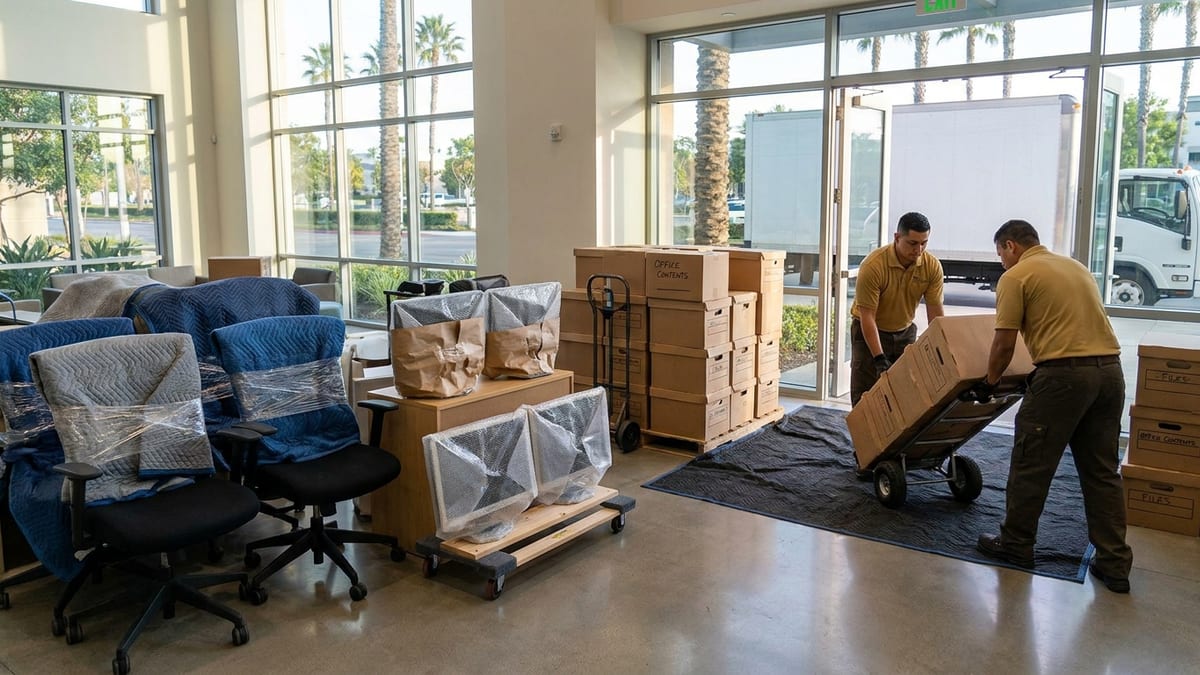
San Diego employers and the neighborhoods new hires land in
San Diego’s relocation traffic is concentrated around a handful of industry clusters, and new hires tend to settle near them.
Biotech and life sciences in Torrey Pines, Sorrento Valley, and UTC draw employees from Boston, the Bay Area, Raleigh, and San Diego State’s graduate programs. New hires in this corridor often land in Carmel Valley, Del Mar, or La Jolla, where housing costs are high and parking at apartment complexes can complicate delivery. Movers need to confirm truck access and elevator reservations in advance at high-rises near the UTC transit center.
Defense and aerospace around Miramar, Kearny Mesa, and National City pull relocations from Virginia, Maryland, and the Pacific Northwest. These employees tend to settle in Mira Mesa, Scripps Ranch, and Santee, where housing is more affordable and truck access is generally straightforward.
Tech companies in the downtown Gaslamp area and Little Italy attract employees from Seattle, Austin, and Denver. Downtown high-rises often require a Certificate of Insurance from the moving company and a booked freight elevator window. This is different from an office move but the COI requirement is the same when moving into a building with a homeowners or building association.
HR managers scheduling a move into any of these corridors should account for San Diego’s cost of living when setting the relocation allowance. Rents and home prices here are among the highest in the country, and an allowance calibrated to Austin or Denver rates will leave the employee short.
The tax note every HR manager and relocating employee needs to hear
Before 2018, employers could reimburse qualified moving expenses tax-free. The Tax Cuts and Jobs Act changed that for most workers. As of this writing, employer-paid or employer-reimbursed moving expenses are generally treated as taxable income for the employee in the year they’re paid.
This means an employee who receives a $10,000 relocation benefit will likely see that amount added to their W-2. Gross-up payments, where the employer increases the relocation benefit to offset the employee’s estimated tax liability, are one common response. Some companies handle gross-ups automatically; others require the employee to negotiate for it.
This is not tax advice. Every situation is different depending on the employee’s tax bracket, state of origin, state of destination, and how the benefit is structured. HR teams and relocating employees should confirm the tax treatment with a qualified CPA or the company’s payroll department before the move is invoiced.
How to coordinate with an HR or relocation manager
The earlier a mover is looped in, the smoother the process goes. Here’s a practical sequence that works for managed moves.
First, HR or the relocation management company contacts the moving company to discuss the program parameters: typical move size, origin cities, destination neighborhoods, timeline expectations, and billing requirements. Establishing this relationship before individual moves are triggered means there’s no setup delay when an employee actually needs to move.
Second, once a specific relocation is approved, the employee contacts the mover directly to schedule a home survey. On-site surveys produce more accurate estimates than phone quotes because the crew can see actual volume, specialty items, and any access challenges at origin.
Third, the mover provides a written binding estimate addressed to the employer or the relocation management company for direct-bill moves. The estimate should itemize packing, transport, storage if applicable, and any specialty services.
Fourth, after delivery, the final invoice goes directly to the employer or relocation management company. The employee receives a copy for their records but is not responsible for payment.
For employees on lump-sum programs, the flow is simpler. They contact the mover, get a binding estimate, confirm it fits within their allowance, and schedule the move. Swift Move SD can provide an itemized written estimate that the employee submits to HR for reimbursement documentation.
HR managers and relocating employees can call (858) 925-5546 to set up a direct-bill account or get a corporate relocation estimate.
Getting a direct-bill estimate for a corporate move
A direct-bill estimate for a corporate relocation needs more detail than a standard residential quote. The mover needs to know the billing entity, the employer’s purchase order or authorization number if applicable, any insurance or COI requirements the destination building has, and the scope of services the relocation package covers.
For moves originating outside San Diego County, the estimate also needs to account for the long-distance rate structure: weight-based or cubic-foot pricing, fuel surcharges, and the delivery window to the San Diego area. Binding estimates lock in the price regardless of actual weight, which protects both the employer’s budget and the employee from surprise charges.
Before signing any estimate, confirm that the mover is Cal-T licensed and USDOT registered. Ask for their license numbers and verify them on the FMCSA website if the move crosses state lines. A reputable mover will hand those numbers over without hesitation.
Storage services are often billed separately from the transport portion of a corporate move. If the employee’s new home won’t be ready on delivery day, confirm the warehouse location and the per-month rate upfront so it can be approved against the relocation budget before the move begins.
For moves that also involve an office component, such as an executive bringing a home office setup that their employer owns, that equipment should be listed separately in the estimate. Employer-owned assets typically require a separate work order and may have different insurance handling than the employee’s personal household goods.
Frequently asked questions
What do corporate relocation services include?
Most corporate relocation programs cover packing, transportation of household goods, and storage in transit at the destination. Some programs also include unpacking, disassembly and reassembly of furniture, and vehicle transport. The specific scope depends on the employer’s relocation policy and the employee’s seniority level.
What’s the difference between a lump-sum and a managed relocation?
With a lump-sum, the employer gives the employee a set dollar amount and the employee handles the move independently. With a managed or direct-bill relocation, the employer or a relocation management company contracts with the mover and pays the invoice directly. Managed programs typically offer more cost control and accountability for the employer.
Are relocation benefits taxable income?
Generally yes, for most employees in the United States since the 2018 tax law change. Employer-paid moving benefits are typically reported as taxable wages on the employee’s W-2. The details depend on the employee’s specific situation, so confirm with HR or a CPA before the move is invoiced.
How far in advance should a corporate relocation be scheduled?
For a local San Diego move, two to three weeks of lead time is usually enough. For a long-distance move into San Diego from another state, four to six weeks gives enough time for a proper survey, a binding estimate review, and scheduling. Last-minute corporate moves are possible but limit carrier options and can affect pricing.
Can the mover bill our company directly?
Yes. Swift Move SD can set up a direct-bill arrangement with an employer or relocation management company. Call (858) 925-5546 to discuss the account setup and get a corporate estimate addressed to your organization.
What neighborhoods do most San Diego relocations end up in?
It depends on the employer’s location. Biotech hires near Torrey Pines and UTC tend to land in Carmel Valley, Del Mar, or La Jolla. Defense contractors around Miramar often settle in Mira Mesa or Scripps Ranch. Downtown tech employees frequently end up in the East Village, North Park, or Hillcrest. Knowing the destination neighborhood matters for planning truck access, COI requirements, and elevator reservations at high-rise buildings.
| Lump-sum | Managed / direct-bill | |
|---|---|---|
| Who pays the mover | Employee pays, then seeks reimbursement | Employer or relocation company pays directly |
| Employee control | Full: employee picks the vendor and scope | Limited: vendor and scope approved by employer |
| Paperwork for employee | Must submit receipts and invoices | Minimal: employee schedules, employer handles billing |
| Paperwork for HR | Reimbursement processing after the fact | Purchase order or authorization upfront, then invoice |
| Best for | Local or regional moves, experienced employees | Long-distance transfers, executive moves, high-value programs |